
The B.E. in Electrical & Electronics Engineering (EEE) is a core undergraduate programme that integrates the principles of electrical engineering, electronics, control systems, and power technologies. The programme is designed to develop graduates who can design, analyze, and manage electrical systems, power generation, distribution networks, renewable energy systems, and automation technologies.
EEE engineers play a vital role in powering industries, modern infrastructure, and smart systems. The programme at Trichy Engineering College equips students with strong technical foundations, problem-solving skills, and exposure to emerging technologies such as smart grids, electric vehicles, and renewable energy integration.
The Department of Electrical & Electronics Engineering at Trichy Engineering College has a long-standing commitment to academic excellence and innovation. The department is staffed with experienced faculty members specializing in power systems, machines, control engineering, and renewable energy.
The department nurtures engineers who are not only technically sound but also socially responsible and ethically grounded.
The curriculum is aligned with AICTE and Anna University guidelines, emphasizing Outcome-Based Education (OBE). It covers fundamentals of electrical sciences along with modern applications in automation and renewable energy.
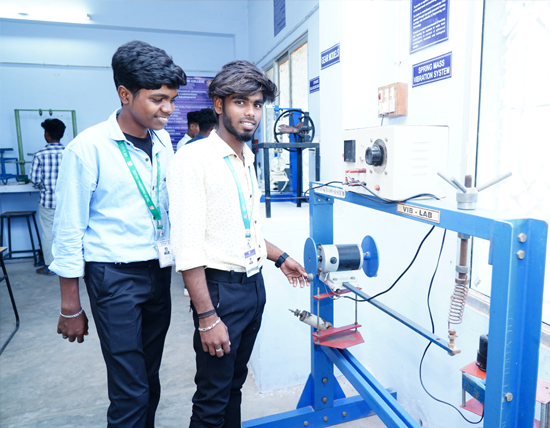
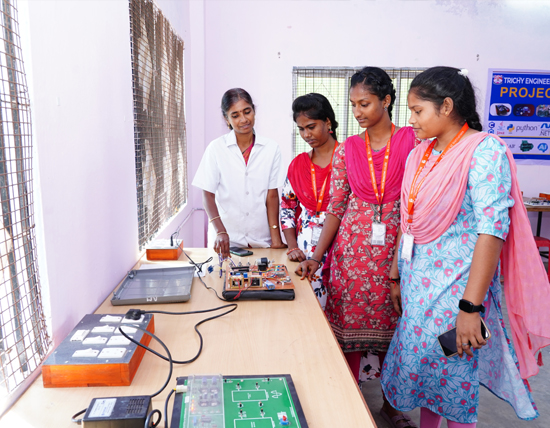
The department is equipped with modern and industry-standard laboratories to provide practical knowledge:
Experiments on DC and AC machines, transformers, and motors.
Solar, wind, and hybrid systems for sustainable engineering research.
PLCs, controllers, and automation kits for system modeling.
Simulation of transmission, distribution, and fault analysis.
Calibration, instrumentation, and testing facilities.
Testing of converters, inverters, and drive systems.
These labs provide an environment where students can apply theoretical knowledge to solve practical engineering problems.
Graduates of EEE have excellent career prospects in core electrical industries, IT-enabled sectors, and government organizations. Career roles include:
EEE graduates are also highly employable in IT companies (hardware, networking, embedded systems) and can pursue higher studies or research in specialized areas of electrical and energy engineering.
4 Years (8 Semesters), Full-Time Programme

HOD

AP

Assistant Professor

Assistant Professor

Assistant Professor

Assistant Professor

Assistant Professor
 +91 63854 29749
 +91 63854 29749